How We Take Custom Orders Online at a Small Sewing Shop
How a small sewing shop takes made-to-measure orders online: two clear product paths, exact measuring guides, one quote form and honest timing rules.
Disclosure. Little Milo's Closet is a ROEM Digital client, and ROEM helped prepare this post.
Short answer: Made-to-measure products sell well online when your shop's pages do the fitting work before the order arrives. Name the ready-made and custom paths clearly, teach measuring with exact landmarks, send one-off requests through one form, and state timing and return rules before checkout.
Online, the customer holds the tape measure
After over 40 years of sewing and tailoring human clothing, I started designing and sewing for Italian Greyhounds in 2012, when my daughter added Milo to our lives. Today my shop makes custom and ready to wear clothing for Italian Greyhounds, Whippets and Greyhounds.
Italian Greyhounds have such unique bodies that getting the fit right matters, not only for warmth and protection but also for safety. Long necks, deep chests and long, thin legs don't follow a pattern drafted for other breeds.
In a fitting room, the tailor takes the measurements. When you sell made-to-measure online, your customer takes them at home, often with a wiggly subject and nobody to hold the other end of the tape. So everything below comes back to one idea: do the fitting work on your shop's pages, before the order comes in.
You might sell cakes, furniture, portraits or signs instead of dog clothes. The steps are the same for anything made to order.
Give ready-made and made-to-order their own clear paths
We sell two ways. Ready to wear pieces are already sewn, come in standard sizes and ship the next business day. Custom pieces are cut and sewn to one dog's measurements, in the style and fabric the customer picks.
Each path has its own rules, so we make the difference hard to miss:
- The title says which path it is. Our listing names start with either "Custom" or "Ready to Wear". A shopper scrolling a grid knows before clicking whether a piece is on the shelf or still on the cutting table.
- Each path has its own timing. Ready to wear ships the next business day. Custom production time depends on how busy the shop is, how many pieces are in the order and how detailed the design is, and we say so.
- The ready-made side filters by size. Pick a size and you see only what's in stock in that size. Nobody should have to open every dropdown to find out a print is sold out in theirs.
If buyers can't tell from the listing which kind of product they're looking at, they'll ask you by email, one at a time. A word at the front of the title answers it for all of them at once.
Teach the measuring before you take the order
"Measure your dog's chest" sounds clear until three people do it three different ways. So we name the exact landmark for every measurement:
- Neck: the full circumference where the collar would naturally rest.
- Chest: the full circumference at the largest point, just behind the front legs.
- Back length: from the high part of the back between the shoulders to the base of the tail, where the tail joins the body.
- Spine to ankle: from the top of the back between the shoulder blades down to the ankle, for styles with legs.
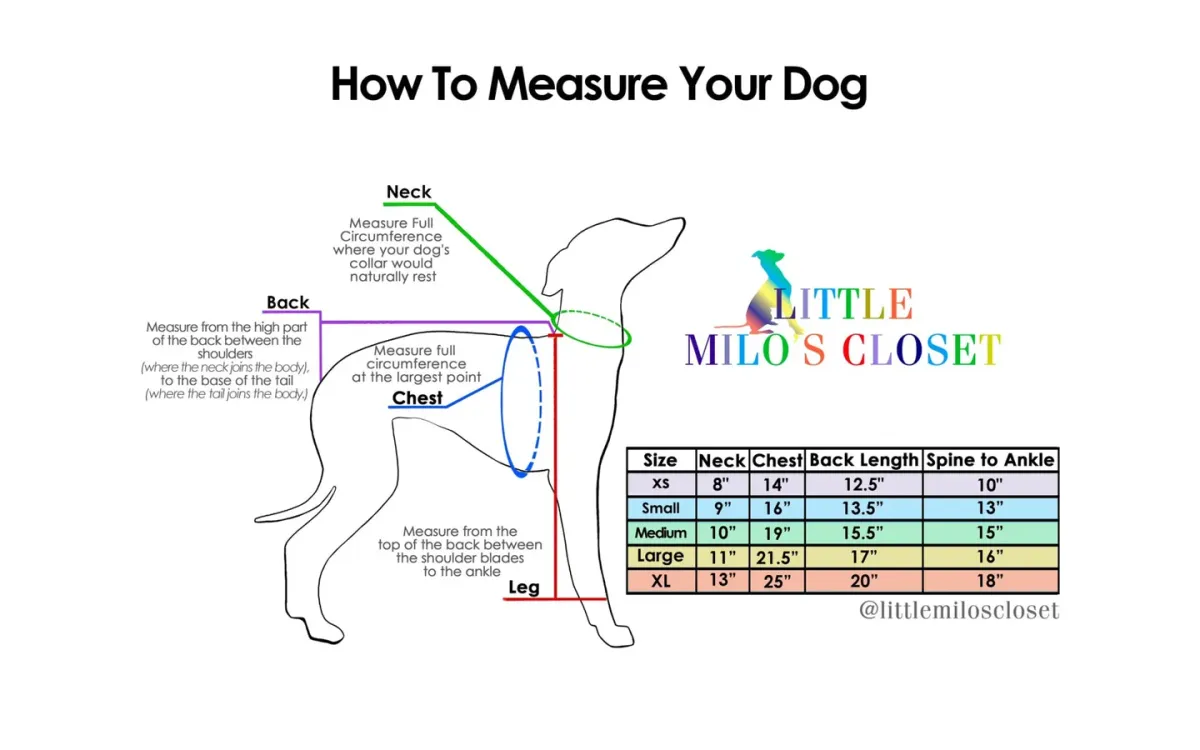
A few habits make a guide like that do its job:
- Put it where the decision happens. Our measuring chart appears in the photos of our product listings, so it's in front of the customer while they're choosing, not buried on a page they never open.
- Publish the numbers behind your standard sizes. Our size chart lists neck, chest, back length and spine to ankle for each size from XS to XL, so customers can compare their own numbers with ours instead of guessing from a label.
- Show it as well as say it. A labeled drawing beats a paragraph, and a short video walkthrough helps anyone measuring for the first time.
- Ask for a photo when the shape matters. For custom requests we ask for a photo of the dog. It helps us get an idea of their shape, size and personality in a way numbers alone can't.
Give one-off requests a single front door
Some requests don't fit any listing: a different breed, a costume for a theme, a piece that so far exists only in the customer's head. We send every one of those to the same place, a custom order quote listing.
The quote form asks for what we need to start: the dog's measurements, the customer's ideas for color, fabric, style and details, and a photo of the dog if they have one. Then the customer checks out with the quote just like any other item.
Running quotes through checkout keeps every request in the same order list as everything else, with the customer's contact details attached, instead of scattered across social media messages and long email threads. From there, the next steps are written on the listing so the customer knows what happens:
- We work on the design and reach out by email if we have questions, so we ask customers to keep an eye on their inbox.
- When the design is complete, the customer gets a notification and an invoice with all the details of the order.
- We start making the piece once that invoice is paid.
Our standard listings point to the quote too. Some say which body lengths they're made for, and a larger dog goes through a custom quote instead. That way a bigger dog gets a piece drafted for their size, not a stretched version of someone else's.
Say how long it takes, before checkout
Made-to-order work runs on a calendar the customer can't see, so we put timing in front of them early. Our listings say that custom production times vary with the design, the materials and how complex it is, and they point customers to the shipping details on each item.
Two more things we tell people before they order:
- A mixed order ships together. If an order includes pieces with different production times, it ships when the piece that takes longest is ready.
- Pauses get announced where people buy. When we have to pause shipping, for travel for example, the notice goes on the product pages and in the cart, so people see it before they pay rather than in an apology afterward.
A promised date you miss costs more goodwill than an honest range you meet. If your timing depends on your workload, say that, and update the wording when the shop gets busy.
Write return rules that match what you make
A made-to-measure piece fits one customer. It can't go back on the shelf for the next one, so a single returns policy for the whole shop doesn't work. Ours splits the same way the shop does:
- Ready to wear can come back within 30 days of delivery if it's unworn, with tags, in the original packaging.
- Custom pieces are made to the dog's measurements, so they can't be returned or exchanged.
- Sale items and gift cards are final.
We also ask customers to contact us before sending anything back, and to tell us right away if something arrives damaged or wrong so we can make it right. The rules sit in our FAQ as well as on the policy page, in plain words, where people read them before they buy.
Clear rules can look strict, but they help the customer too: nobody should order a custom piece thinking they can send it back.
Help people choose materials by what they're for
We offer over 500 fabrics, which is far too many to scroll through one by one. So we group them into a dozen types and give each type a plain job description:
- Fleece: a warm everyday layer.
- Sherpa: plush and extra cozy.
- Quilted nylon: for wind and weather.
- Rain wear: for drizzly walks.
- UV sun fabric: for sun protection.
- Cotton lycra: stretchy and light.
The customer picks the job first, then the print. Somebody shopping for a dog who shivers on winter walks doesn't need to wade through rain wear or sun fabric to find it.
When a fabric is limited, we say that too. Some of our listings note that I have a limited number of yards in the colors available. A shopper who knows a print may run out can decide sooner, and it's kinder than confirming an order for a fabric that's already gone.
Let your customers show the fit
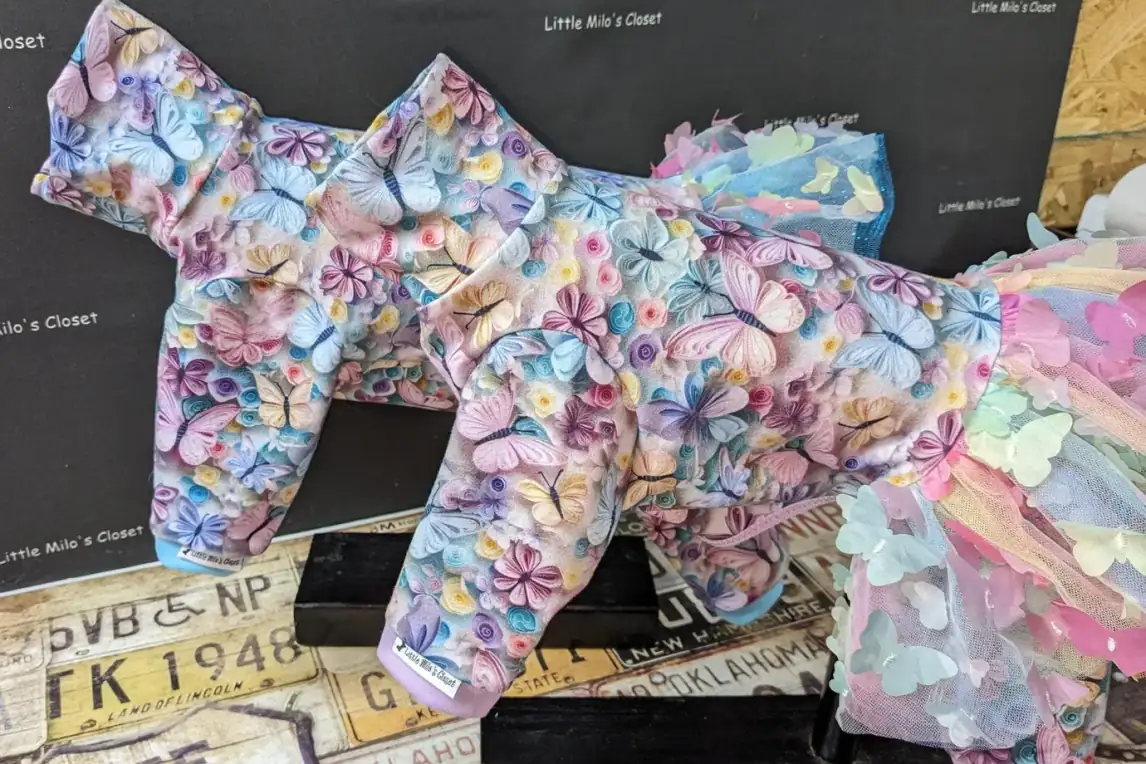
Many of our product photos show the piece on a dog-shaped form, which shows the cut and the fabric clearly. What a form can't show is how a piece sits on a real dog in a real living room. Customers can show that better than we can.
We keep a photo gallery of real pups wearing their pieces, sent in by their people through a simple submission form. Each photo carries the dog's name and a line from their person, and we approve every submission before it appears.
Two things make a gallery like this useful rather than decorative:
- Tell people what makes a good photo. We ask for bright, natural light and a clear view of the whole outfit, and photos of the dog standing or walking show the fit best. A sweet photo of a dog curled up in a blanket says little about how a piece fits.
- Show more than one kind of customer. We specialize in Italian Greyhounds, but we also make outfits for Whippets, full-size Greyhounds and other breeds, so photos of those dogs help their owners picture the fit too.
Where to start in your own shop
You don't need to rebuild your store to do any of this. Most of it is wording, and you can change wording this week:
- Start each listing name with the kind of product it is, so ready-made and made-to-order never get confused.
- Write your measuring guide with exact landmarks, and put it in the listing photos.
- Send every one-off request through one form that asks for the details and a photo, and write down what happens after.
- State timing and return rules for each path before checkout, not after.
- Group materials by what they're for, and say when supply is limited.
- Ask customers for photos, and tell them what makes a good one.
If you only do one thing, pick the question you answer most often by email and put the answer on the listing, where people decide. That's where the fitting work belongs.
Frequently asked questions
How do I take custom orders through an online store?
Give custom work its own clearly named listings, plus one quote form for anything unusual. Ask for the measurements or specs you need, the customer's ideas and a photo, then explain what happens next: questions by email, an invoice once the design is complete, and production after payment.
Should made-to-measure products be returnable?
Usually not, because a piece made to one customer's measurements can't be resold to the next. Say so plainly before checkout, keep a normal return window for your ready-made stock, and ask customers to tell you right away if anything arrives damaged or wrong.
How do I stop customers sending the wrong measurements?
Name the exact landmark for each measurement, such as around the widest part of the chest just behind the front legs. Put a labeled chart in the listing photos, add a short video if you can, and ask for a photo so you can see the shape behind the numbers.
Should I list production times for made-to-order items?
Yes. Give an honest range, or say what the timing depends on, such as how busy you are and how detailed the design is. Put it on the listing before checkout, and tell customers when an order with several pieces ships together.
Guest posts share the author's own experience and views. ROEM Digital edits them for clarity and accuracy.