Small on Purpose: What Sister Circles Taught Me About Group Programs
A life coach who runs small women's circles explains how to size, shape and fill a group program so that every person in the room is still heard.

By Rachel Nelson, Founder and Life Coach, Bridging the Gap Coaching & Development.
Edited by ROEM Digital.
Disclosure. Bridging the Gap Coaching & Development is a ROEM Digital client, and ROEM helped prepare this post.
Short answer: Set the size of a group program from the experience you promise, not from the size of the room. Build each group around one shared season, give it a steady rhythm and a clear shape, talk with every person before they join, and keep a list for the next round instead of overfilling this one.
How small should a group program be? Start with what you promise
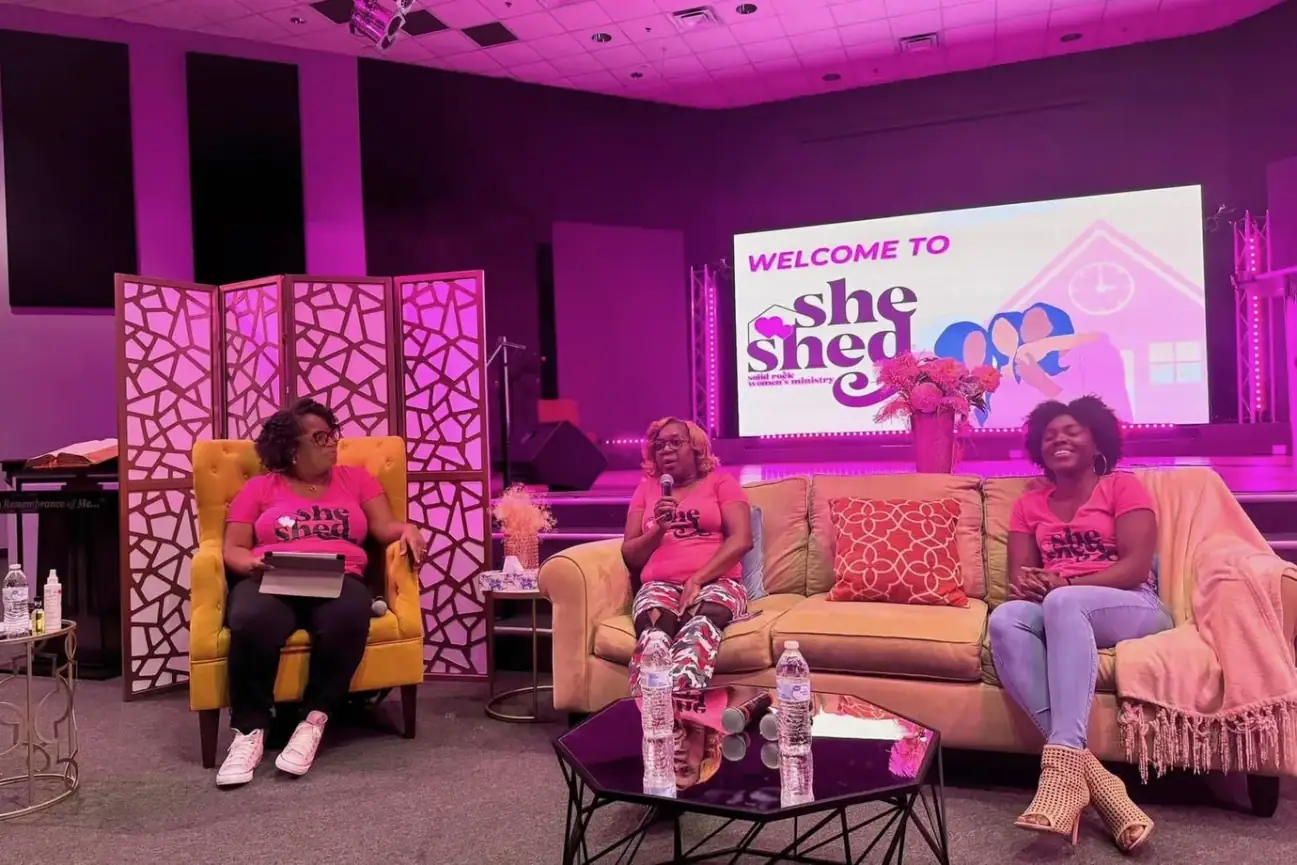
I'm a faith-driven life coach in Central Florida. Alongside one on one coaching, I lead The She Shed, small coaching circles for women that meet in person and online, and I lead a marriage workshop for couples with Mark Nelson as co-facilitator. Every one of those is a group of some kind, and every one is small on purpose.
If you run classes, workshops, cohorts or support groups, you've probably felt the pull to say yes to one more person. More people can feel like more success. But a group isn't a lecture. People come to be heard, and there's only so much listening one facilitator can do in a single session.
So I set the size from the promise, not from the room. I tell women plainly that spots in each circle are intentionally limited, and I tell couples that the workshop is kept small so every couple in the room gets real attention. Once you've made a promise like that out loud, it becomes your limit.
Here's a quick check you can run on your own program. Take the length of the session, subtract the time you spend welcoming people, teaching and wrapping up, and divide what's left by the number of people. In a 90 minute session with 30 minutes of teaching and housekeeping, 12 people get about five minutes each to talk. Eight people get seven or eight minutes. If your promise is that everyone gets heard, that math shows you where your ceiling is.
Give it a rhythm people can keep, in a format they can reach
Our circles meet monthly, in person and online. The women I serve are wives, mothers, ministers and businesswomen, and a monthly rhythm is one a full life can keep.
Both circles open right now meet online, so a woman can join from anywhere. That's deliberate: distance and schedule shouldn't decide who gets to belong.
Whatever rhythm you choose, make it predictable. People plan around a pattern, like the same week each month, far more easily than around dates announced one at a time. If you offer an online version, give it the same care as the in-person one: the same structure, the same welcome and the same expectations.
Give every program a clear start, a set length and an ending
An open-ended group can drift. People find it easier to commit when they can see the shape of a program before they say yes.
My pre-marital coaching is a good example. It starts with the SYMBIS assessment, a personalized look at how a couple connects, communicates and grows, and then continues through four to six guided sessions on communication, expectations and the key areas of a healthy marriage. The couple knows where it begins, roughly how long it runs and what it covers.
The marriage workshop has a shape too: seven conversations, from God's design for marriage and love languages to expectations, communication, vulnerability and conflict resolution. And new circles open by season, so there's always a clear moment to join.
For your own program, decide these four things before you open it:
- Where it starts. An intake form, an assessment or a first session that's the same for everyone, so you begin from real information instead of guesses.
- How long it runs. A set number of sessions or weeks, even if it's a range like four to six.
- What it covers. A short list of topics people can read before they join.
- What happens at the end. A next step, whether that's another round, one on one work or simply a good goodbye.
Fill the next round with an interest list, not an overfull room
When a group is full, the worst thing you can do is squeeze in one more person. The better move is to start a list for the next one.
That's how I handle the marriage workshop while dates are being finalized. Couples add their names, and they're the first to receive the date, time and location once it's set. Then I follow up with each couple personally.
The sign-up form asks for a few things that help me plan the room: both names, whether the couple is engaged, married, dating and considering marriage, or attending alone, and their wedding or anniversary date. Those answers tell me who will be in the room before anyone walks in.
For your own list, keep the form short, ask only for what changes how you'll run the session, and tell people exactly what they'll get from you and when. "You'll be the first to hear the date" is a promise you can keep. "We'll be in touch" isn't much of one.
Talk with every person before they join
Every engagement in my practice begins with a conversation. Someone reaches out with a little about their season and what they're hoping for, we talk with no pressure and no script, and then we find the right next step together. I read and answer every message myself.
That conversation protects the group as much as it serves the person. Sometimes the right next step is a circle. Sometimes it's one on one coaching or a guided program instead. A group works best when everyone in it needs what the group actually does, and a short talk up front is the kindest way to find that out.
If you add a fit conversation to your own program:
- Keep it short, and make it clear there's no pressure, so people tell you the truth.
- Ask what they hope will be different afterward, and listen for whether your group can actually do that.
- Have somewhere better to send people who aren't a fit, even if it's someone else's program.
- Reply yourself if you can. A personal answer sets the tone before the first meeting.
Set the tone of the room before the first meeting
People decide how honest to be in the first few minutes. The tone I hold for every circle is simple: no performance, no pretending, and room for every woman to be exactly who she is. A tone like that has to be said out loud. It can't be assumed.
Whatever your group is, decide its tone ahead of time and name it at the start: how people speak to each other, how personal things shared in the room are treated, and what you'll do if a conversation goes off course. It takes two minutes, and it saves you from correcting someone in front of everyone later.
Bring in a co-facilitator when two perspectives help
I lead the marriage workshop and my pre-marital coaching with Mark Nelson as co-facilitator, so couples are supported by both perspectives as they prepare for the life ahead, not just the wedding day.
Two leaders take more planning, so it's worth asking when a second one pays off. A co-facilitator makes sense when your group needs a viewpoint you can't give on your own, or when one person needs to watch the room while the other leads. If the group is small and the subject is yours alone, one steady facilitator is usually enough.
A short checklist before you open your next group
- Write down your promise, then set the size from it.
- Name the group for the one season it serves.
- Pick a rhythm people can plan around, and decide on in person, online or both.
- Decide where it starts, how long it runs, what it covers and how it ends.
- Start an interest list for the next round before this one fills.
- Talk with each person before they join, and have a better option ready for anyone who isn't a fit.
- Name the tone of the room out loud at the first meeting.
None of this needs special software or a big budget. It needs you to decide, ahead of time, what kind of room you're building and who it's for. Keep it small enough that everyone is heard, and you'll be able to keep the promise you made.
Frequently asked questions
How many people should be in a small group program?
There's no single right number. Start with what you promise, such as everyone gets heard each session, then divide the talking time you have by the number of people. When each person's share gets too small to keep that promise, you've found your limit.
Should a group program meet in person or online?
Both can work. Meeting online lets people join from anywhere, so distance and schedule don't decide who belongs. If you offer both, give the online group the same structure, welcome and expectations as the in-person one.
How do you fill a group before the date is set?
Keep an interest list. Ask for names, an email and only the details that change how you'll run the session. Promise people they'll be the first to hear the date, time and location, and follow up personally once it's set.
When does a group program need a co-facilitator?
When the group needs a perspective one leader can't give alone, or when someone has to watch the room while the other leads. For a small group on a subject that's yours alone, one steady facilitator is usually enough.
Guest posts share the author's own experience and views. ROEM Digital edits them for clarity and accuracy.